
She Fainted Watching Him Use It. The Next Morning, She Read the Back of the Can. (One line on David's minoxidil explained eight months of nothing. Here's what it says, and what they used instead.)
Michelle, 49, collapsed in her own hallway watching her husband rub minoxidil foam into his receding hairline. She wasn't ill. She was worn out from months of watching him try. What she found on the label the next morning changed what they did next, and it applies to every man using the foam on his temples.

Whether you're the one at the mirror or the one watching from the hallway, keep the can nearby. You'll want to read the back of it in a minute.
It wasn't a medical emergency. It was eight months catching up with her.
It was a Friday. Another dinner with friends, another joke about David's hairline, another night of Michelle smiling through it. When they got home, he went straight upstairs. She found him at the bathroom mirror, shirtless, rubbing foam into the corners of his forehead in slow circles, leaning in to check for something that wasn't there. Her chest tightened, the hallway tilted, and she went down onto the tile.

She was fine. A bump on the head and a long night. But lying there, looking up at him with the foam still dripping from his hairline, she knew she couldn't keep watching him do this. The next morning she picked up the can.
The answer had been in their bathroom the whole time.
On the back of the can is a panel marked Drug Facts. Under "Use," it says minoxidil is for regrowing hair on the top of the scalp (vertex only). A few lines down, in the warnings, is the sentence Michelle read three times: "Not intended for frontal baldness or receding hairline."
That's not a footnote. It's on the label because the studies that got minoxidil approved measured hair on the crown, the round patch on top. The hairline was never shown. So the label only covers the crown. David had spent eight months putting it on the one part of his head the can says it isn't for.

David didn't fail. He did exactly what he was told. He was just told to use it on the wrong part of his head. And if you're using it on your temples, so were you.
That morning Michelle called the dermatology clinic. What the physician assistant told her is why David put the can in the bin.
Cactevo: the signal clinics use, in a bottle you use at home.
The PA didn't suggest a stronger foam. She told Michelle about Cactevo, a serum that delivers human-derived growth factors, the signalling proteins clinics use in-office, straight to the follicles at the hairline. Nano-diamond particles carry them past the scalp barrier, so the signal reaches the follicle instead of sitting on the skin.
No foam. No half hour waiting for it to dry. A few drops on the corners, two minutes, done. David started that week.

Here are the five reasons men with a receding hairline, and the women watching them, are making the same switch.
The box itself says it isn't for your hairline.
Most men find out by accident. Their wife reads the can. Their kid reads it out loud at breakfast. A pharmacist says it across the counter. And the reaction is always the same: how long has that been there?
The whole time. Every can, every box. "Vertex only." "Not intended for frontal baldness or receding hairline."
Go to the Drug Facts panel on the back of your can or box. Read the Use line, then the Warnings. If you've been putting it on your temples, the label has been telling you the whole time that's not what it's for.
That's why so many men say it "did nothing" at the front. On the hairline, it was never supposed to.
— the sentence nobody says at the counter —
Nobody told you, because the script takes thirty seconds.
You went in about your hairline. You came out with minoxidil. Most men do. It's cheap, it's FDA-approved, it's on every shelf, and it's the first thing that comes to mind. The appointment's over before anyone turns the box around.
When Michelle called the clinic, the physician assistant didn't dress it up.
"It's cheap. It's FDA-approved. And it's the only thing most doctors know how to prescribe for hair loss. They don't tell patients it won't work on the hairline because most of them don't read the label themselves. They just write the script and move on."
Nobody's lying to you. It's just the default answer, and the default answer was built for the crown. The man asking about his temples gets the same one, every time.
— how most men start —
So if you've spent a year, or five, getting nothing at the front, stop blaming yourself. You did it right. You were handed the wrong thing.
Every month on the wrong treatment, the corners keep moving back.
Hair loss at the temples doesn't wait while you figure it out. The follicles at the corners shrink a little more each cycle. The hairs get finer, shorter, lighter. Then one day they stop coming back.
That's the part nobody wants to hear: a follicle that's shrinking is still reachable. A follicle that's gone isn't. Every month on something that was never meant for the hairline is a month those follicles don't get back.
Stand by a window and look at your corners. If there are short, fine, almost see-through hairs there, those follicles are still alive. They're shrinking, not dead.
That's the window. It doesn't stay open forever, and it's the window everything in this article is about.

If you're the one watching, it was never the hairline. It's the routine.
Twice a day. The foam. The half hour waiting for it to dry before you can lie down. The greasy patch on the pillowcase. The bathroom door closed a little longer than it used to be. Leaning in to the mirror, checking the corners, every single night.
Men think the hairline is what their wife notices. More often it's the ritual. It's watching the man she married spend a year rubbing something into his head that isn't working, and not knowing how to tell him.
You're not shallow for noticing, and you're not the only one. About 4 in 10 people who read Michelle's story were wives and partners. Most of them said the same thing: it isn't the hair, it's watching him try so hard at something that was never going to work.
Cactevo takes two minutes, leaves no greasy mess on the pillows, and turns a stressful closed-door secret into a quick daily routine you can do together.
— what the routine looks like with Cactevo —
Cactevo is a few drops of serum on the corners, massaged in. About two minutes. No foam, no greasy mess on the pillow, nothing to hide behind a closed door. The relief is shared.

It sends the hairline the signal it stopped getting, with the human-derived growth factors clinics use.
Minoxidil was never designed for hair. It's a blood-pressure drug, and hair growth turned up as a side effect. On the scalp, it works by widening blood vessels and hoping the follicle responds. It's a push from the outside.
Cactevo works differently. It delivers human-derived growth factors, the same kind of signalling proteins hair clinics use in their in-office treatments that run hundreds of dollars a session. They tell a shrinking follicle to stay in production. No forcing, no hoping. The signal itself.
It's what the physician assistant told Michelle about on the phone: what the clinic uses in-office, in a bottle you use at home.
And because a signal is no use sitting on top of the skin, Cactevo carries it on nano-diamond particles small enough to take the growth factors down through the scalp barrier to the follicle.
Now the honest part. If your temples have been smooth, shiny skin for years with no fine hairs at all, nothing you put on your scalp will bring that back, and anyone who says otherwise is selling you another can. Cactevo is for the corners that are still there and still shrinking. For most men reading this, that's exactly the hairline in the mirror.

What the first four months actually look like.
No overnight miracle. What men report month by month, in the order they report it.

The foam goes in the bin.
Nothing new on your head yet. What changes first is the bathroom: two minutes instead of half an hour, nothing on the pillow, the door stays open. Less hair in the sink by the end of the month.

Fine hairs at the corners.
Short, fine hairs where the temples had gone bare. Easy to miss unless you know where to look. Michelle found David's first ones with her thumb, putting the serum on him one night.

Someone else notices.
The fine hairs get thicker and darker. Usually a friend, a barber or a wife says something before he lets himself believe it. For David it was the same friend who'd made the joke at dinner.
Three parts, doing three jobs. Nothing hidden.
No proprietary blend, no eleven-ingredient mechanism stack. A signal, a carrier, and a scalp actives base. Made in Tokyo.

Stem Cell- Follicular Regrow System
Human-derived growth factors and signalling proteins the follicle reads directly. Cell-free: you're applying what the cells produce, not the cells. This is the part minoxidil can't replicate.

Precision Scalp Delivery
Ultra-small, stable carriers that move the signal down through the scalp barrier, solving the delivery problem that leaves most topicals sitting on the surface.

Cactus Nutrient Repair Complex
A desert botanical built to survive on almost nothing. It keeps the scalp calm and conditioned so the signal lands on healthy ground. Secondary to the signal, and named plainly as such.
Put the foam down. Give the corners a signal they can read.
A follicle takes roughly two to three months to move from resting back into growth. One bottle lasts about 30 days, so three bottles is one full cycle, and it lines up exactly with the 90-day money-back guarantee. Right now the protocol is Buy 2, Get 1 Free. Ordering for him? It's the same protocol, and the guarantee covers him just the same.

The 90-Day Hairline Protocol (Buy 2, Get 1 Free)
3 bottles, full 3-month cycle: $58 total (normally $129.99, save $71.99)
Includes our 90-day money-back guarantee
Start the 90-Day ProtocolWe ran it past a clinician.

"The label says vertex only for a reason. The evidence behind topical minoxidil is on the crown. I see men every week who've used it on their temples for years and were never told that."
"The hairline needs a different conversation. Growth-factor signalling is a different mechanism from a vasodilator, and it's the one we reach for in clinic when we're working on the front."
"If there are still fine hairs at the corners, there's still something to work with. What I tell men is simple: don't spend another year on the wrong spot."
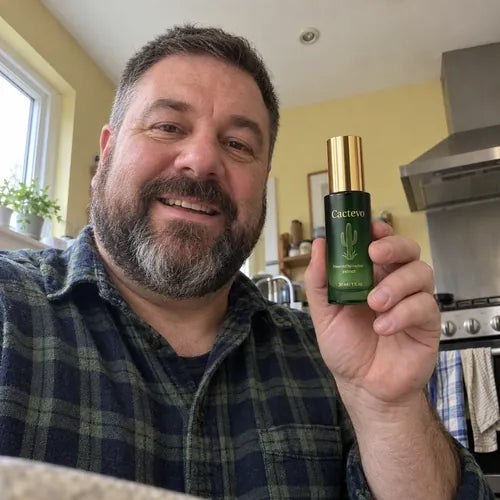
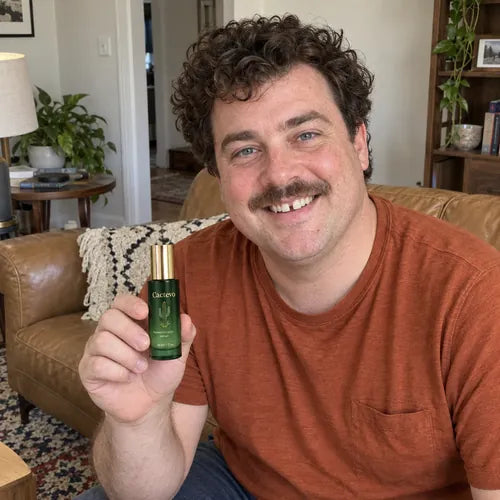
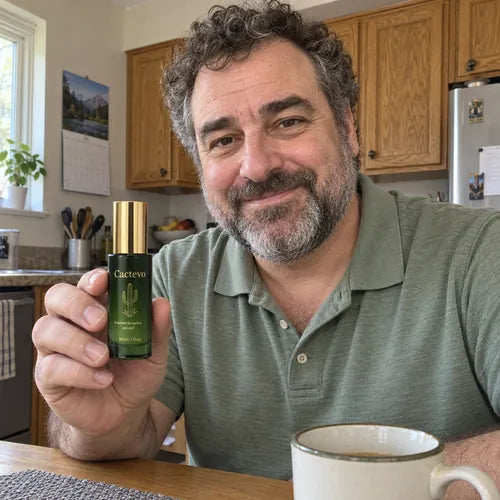
Real men. Months on minoxidil. Then this.
Selected from 4,158 customer reviews and our own reader survey of men who came to Cactevo after minoxidil.
















The fine hairs at your corners are the ones still worth saving.
Three bottles, one full growth cycle, and a 90-day money-back guarantee that covers every day of it. Buy 2, Get 1 Free while the promotion runs.
The 90-Day Hairline Protocol (Buy 2, Get 1 Free)
3 bottles, full 3-month cycle: $58 total (normally $129.99, save $71.99)
Includes our 90-day money-back guarantee
Start the 90-Day ProtocolP.S. Michelle asked us to pass one thing on: "Don't wait until you're on the floor to read the can." Tonight, before the foam goes on, turn it around and read the back. "Not intended for frontal baldness or receding hairline." Once you've seen it, you can't put it back on your temples the same way. The fine hairs at your corners are still reachable. In another year they might not be.
P.P.S. The 90-Day Protocol is three bottles for the price of two, one full growth cycle, with the 90-day money-back guarantee on top. The only thing you risk is another year on the wrong spot.